
* Please Note: This information is based partly on Traditional Medicine which uses natural materials to support health. This information has not been evaluated or approved by the FDA. These statements have not been evaluated by the Food and Drug Administration (FDA). These products are intended to support general well being and are not intended to treat, diagnose, mitigate, prevent, or cure any condition or disease. If conditions persist, please seek advice from your medical doctor.
Description
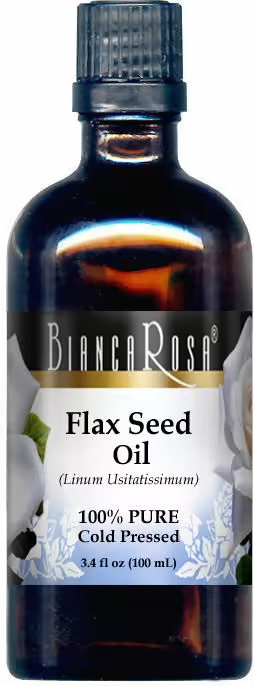
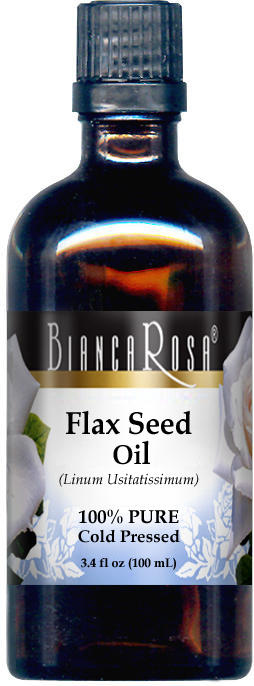
Botanical Name: Linum usitatissimum
Extraction Method: Cold pressed
Description: Flax Seed oil is very high in the natural anti-oxidant Vitamin E. It is also a good oil for preventing scarring and stretch marks.
Color: Light brown
Aromatic Description: Flax Seed oil smells like freshly melted butter
Common Uses: Flax Seed oil is often added to other carrier oils and creams and lotions in order to add skin strengthening properties.
Consistency: Typical and characteristic of carrier oils.
Absorption: Typical and characteristic of carrier oils.
Shelf Life: Flax Seed oil is quick to go rancid; users can expect a shelf life of 6 months with proper storage conditions (cool, out of direct sunlight). Refrigeration after opening is recommended.
User Group Forum
Share your questions and information with the ZooScape community!
Vanessa - April 3, 2007, 16:26
#10001096
Do you just take a straight tablespoon daily? Or should you add it to something?
ZooScape Moderator - July 16, 2007, 18:54
#10001495
Flax Seed Oil has a mild, nutty flavour that can be taken straight from the spoon or added to fruit smoothies, yogurt, cottage cheese, syrups and sauces, salad dressings, or anything that you can dream up. If you add it to hot dishes, just make sure that it is added afterwards so that heat won't destroy any of its natural goodness. Some sources tell us that EFA oils when heated up become toxic, so never use it as a frying oil. Experimentation really is the key and there aren't too many rules that you need to follow. Make sure it is cold-pressed, avoid exposing it to heat, and keep it stored in the refrigerator. After a few weeks, it may begin to turn rancid, so smaller quantities might be the way to go.
Georget yacoub - May 30, 2006, 20:10
#10000662
I was wondering if the flaxseed oil can be used on my hair? If so,how do I go about using it? I saw in one of my hair books that it can be used on the hair,but they didn't specify how.
ZooScape Moderator - June 13, 2006, 14:26
#10001444
I'm not familiar with how the oil would be used, but I'm assuming the application would be similar to oils like neem and olive oil, which are frequently used alone or as shampoo additives.
Some people mix dry flax seeds or flax powder with water. It may be necessary to let the mixture soak overnight and then blend it thoroughly the following morning. You'll have to experiment to discover what ratio of flax to water you like the best. To this 'mud' you can then add a few drops of your favorite essential oil, like tea tree or lavender for example, as a natural fragrance. Just use it as you would a regular shampoo, but just make sure you rinse your hair thoroughly.
Directions
Bianca Rosa® natural carrier oils provide the perfect medium in which to dilute potent essential oils and "carry" them onto the skin and into the body. These deep-nourishing oils provide even distribution and absorption with light and non-sticky lubrication. Depending on the potency of the essential oil being diluted, generally, adding 1-3 drops of essential oil to every 5 mL (1 tsp.) of carrier oil is sufficient for most massage or skin care needs. Massage gently into the skin with a circular motion. Apply as needed or as directed.
Cautions
FOR TOPICAL USE ONLY. NOT TO BE TAKEN INTERNALLY.
Should skin sensitivity occur discontinue use. Store in a cool dry place. Keep out of reach of children.
These statements have not been evaluated by the Food and Drug Administration (FDA). Products are intended to support general well being and are not intended to treat, diagnose, mitigate, prevent, or cure any condition or disease. If conditions persist, please seek advice from your medical doctor. The essence of the current American rule on Traditional Uses is, as stated by FTC, "Claims based on historical or traditional use should be substantiated by confirming scientific evidence, or should be presented in such a way that consumers understand that the sole basis for the claim is a history of use of the product for a particular purpose."