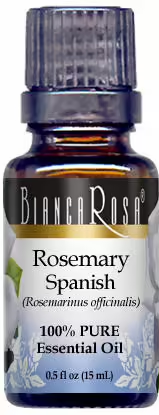
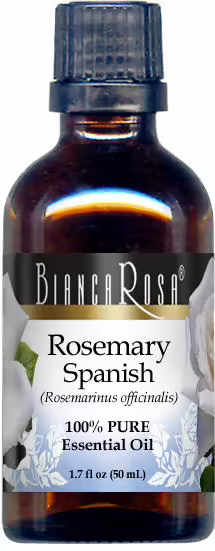
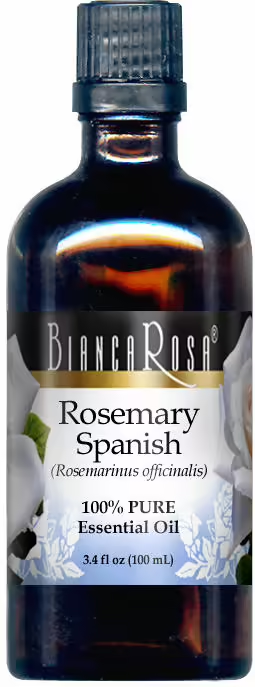
Rosemary Spanish Essential Oil
| Images | Product Name | Size | ZIN | Price | Quantity | Add to Cart |
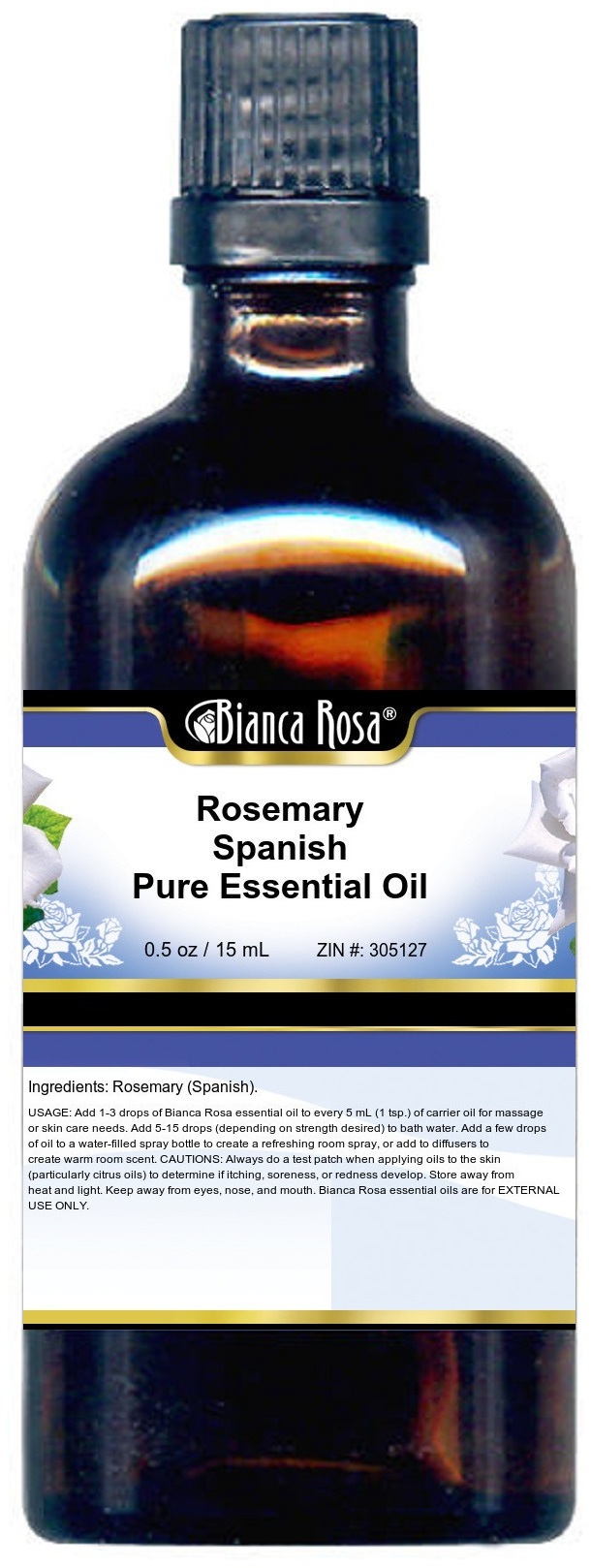
| Rosemary Spanish Pure Essential Oil | 0.50 oz | 305127 | $16.32 | |||
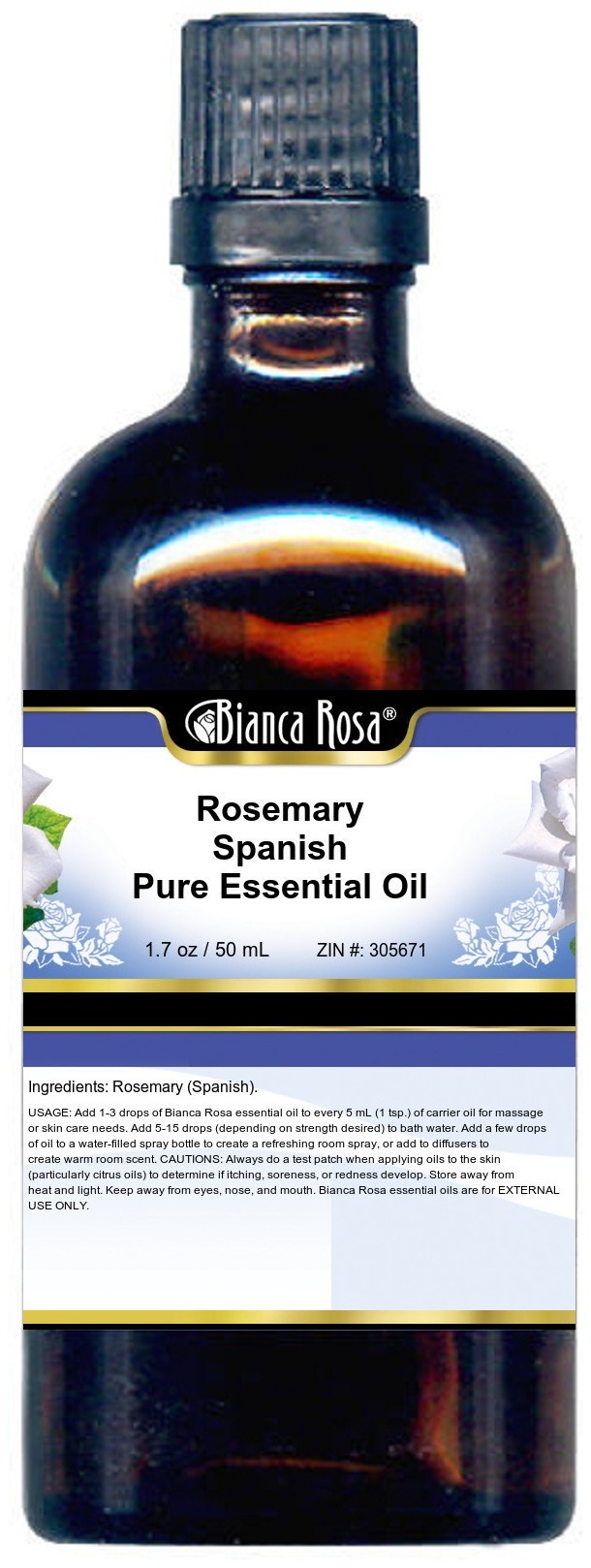
| 1.70 oz | 305671 | $33.32 | ||||
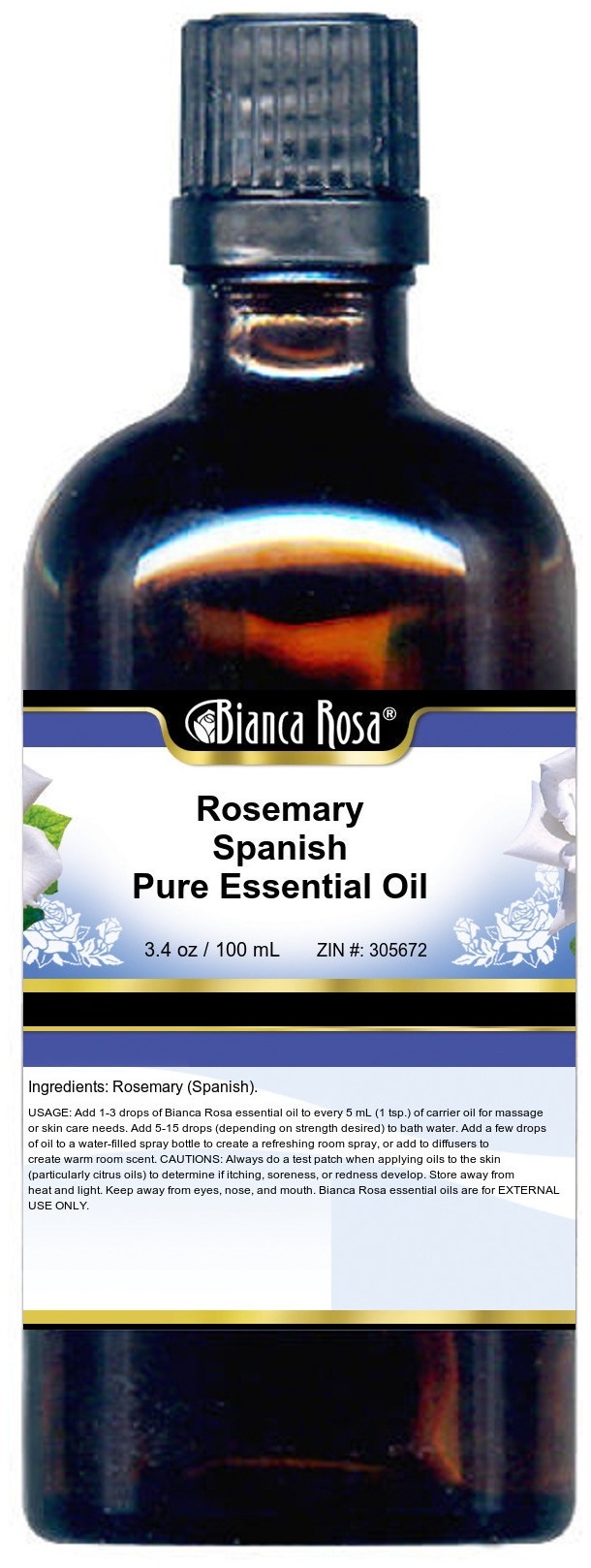
| 3.40 oz | 305672 | $53.98 |
Rosemary is generally thought of as inexpensive and plentiful, but such is not the case. Rather it is inexpensive and plentiful because it is one of the most adulterated essential oils on the market. Real Rosemary is moderate to expensive depending on country of origin; Spanish being moderate and French being expensive with producers in other parts of the world somewhere in-between. The so-called Moroccan is the least expensive, most plentiful and most often resembles adulterated Rosemary.
There are two basic reasons authentic Rosemary is costly:
1. Much of it is a wildcrafted herb making harvest more labor intensive.
2. The yield of oil from plant material is only 0.35% to 0.85%. In other words, about 1/2 pounds of oil for 100 pounds of plant material.
The percentages of constituents found in Rosemary essential oil vary over a wide range depending on the usual environmental but more specifically country of origin. Spanish, Moroccan, French, and Tunisian represent four basic variations in percentages of constituents. Chemotypes are cineol, camphor and verbenone. They all share the same constituents even if just trace amounts. The Rosemary (CT) verbenone is thought to be the highest quality Rosemary but any real Rosemary with less than 25% 1,8-cineol should have at least 0.5%-5% verbenone content. Verbenone is a ketone found in Rosemary from 0.5 to 15%. It is one of the important indicator of true Rosemary.
True Rosemary with a high verbenone content is usually used as a starting material to which other oils, isolates and "nature identical" synthetics are added. To this date verbenone is not produced on any scale by a fragrance chemical manufacturer, which makes it less likely that it would be used to adulterate Rosemary. Constituents in Rosemary such as alpha pinene, myrcene, cineol, and camphor can be added as isolates from other essential oils or fragrance materials, so the percentages of those compounds can not be used as markers of authenticity. Besides, their percentages vary over a fairly wide range even in real Rosemary due to botanical variations, growing environment and production variations. Rosemary with over 40% cineol could indicate adulteration with Eucalyptus.
Essential Oils by Bianca Rosa are 100% Pure Natural Essences derived from the highest quality fruits, flowers, leaves, spices, herbs and roots. Our essential oil distillers and growers are located around the world, operating ethically, organically and chemical-free.
Bianca Rosa Essential Oils Are Not Tested On Animals.
There are two basic reasons authentic Rosemary is costly:
1. Much of it is a wildcrafted herb making harvest more labor intensive.
2. The yield of oil from plant material is only 0.35% to 0.85%. In other words, about 1/2 pounds of oil for 100 pounds of plant material.
The percentages of constituents found in Rosemary essential oil vary over a wide range depending on the usual environmental but more specifically country of origin. Spanish, Moroccan, French, and Tunisian represent four basic variations in percentages of constituents. Chemotypes are cineol, camphor and verbenone. They all share the same constituents even if just trace amounts. The Rosemary (CT) verbenone is thought to be the highest quality Rosemary but any real Rosemary with less than 25% 1,8-cineol should have at least 0.5%-5% verbenone content. Verbenone is a ketone found in Rosemary from 0.5 to 15%. It is one of the important indicator of true Rosemary.
True Rosemary with a high verbenone content is usually used as a starting material to which other oils, isolates and "nature identical" synthetics are added. To this date verbenone is not produced on any scale by a fragrance chemical manufacturer, which makes it less likely that it would be used to adulterate Rosemary. Constituents in Rosemary such as alpha pinene, myrcene, cineol, and camphor can be added as isolates from other essential oils or fragrance materials, so the percentages of those compounds can not be used as markers of authenticity. Besides, their percentages vary over a fairly wide range even in real Rosemary due to botanical variations, growing environment and production variations. Rosemary with over 40% cineol could indicate adulteration with Eucalyptus.
Essential Oils by Bianca Rosa are 100% Pure Natural Essences derived from the highest quality fruits, flowers, leaves, spices, herbs and roots. Our essential oil distillers and growers are located around the world, operating ethically, organically and chemical-free.
Bianca Rosa Essential Oils Are Not Tested On Animals.
These statements have not been evaluated by the Food and Drug Administration (FDA). Products are intended to support general well being and are not intended to treat, diagnose, prevent, or cure any condition or disease.
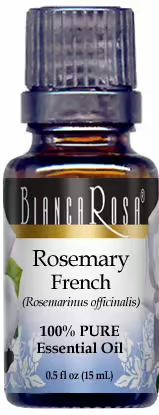
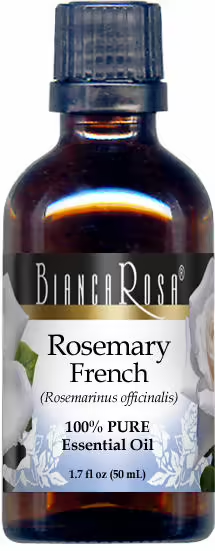
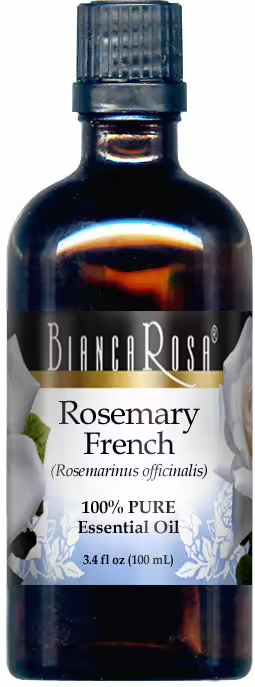
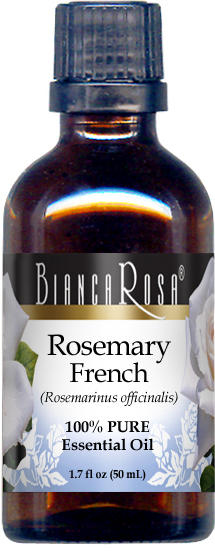
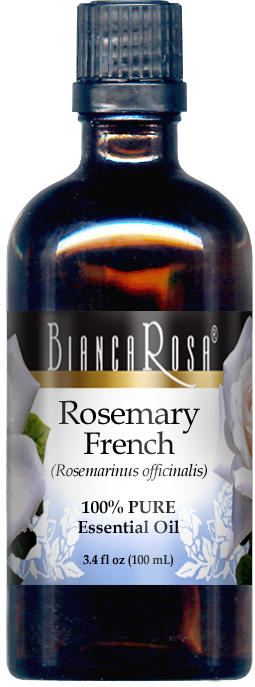
Rosemary French Essential Oil
| Images | Product Name | Size | ZIN | Price | Quantity | Add to Cart |
| Rosemary French Pure Essential Oil | 0.50 oz | 406740 | $16.32 | |||
| 1.70 oz | 406741 | $33.32 | ||||
| 3.40 oz | 406742 | $53.98 |
Rosemary is generally thought of as inexpensive and plentiful, but such is not the case. Rather it is inexpensive and plentiful because it is one of the most adulterated essential oils on the market. Real Rosemary is moderate to expensive depending on country of origin; Spanish being moderate and French being expensive with producers in other parts of the world somewhere in-between. The so-called Moroccan is the least expensive, most plentiful and most often resembles adulterated Rosemary.
There are two basic reasons authentic Rosemary is costly:
1. Much of it is a wildcrafted herb making harvest more labor intensive.
2. The yield of oil from plant material is only 0.35% to 0.85%. In other words, about 1/2 pounds of oil for 100 pounds of plant material.
The percentages of constituents found in Rosemary essential oil vary over a wide range depending on the usual environmental but more specifically country of origin. Spanish, Moroccan, French, and Tunisian represent four basic variations in percentages of constituents. Chemotypes are cineol, camphor and verbenone. They all share the same constituents even if just trace amounts. The Rosemary (CT) verbenone is thought to be the highest quality Rosemary but any real Rosemary with less than 25% 1,8-cineol should have at least 0.5%-5% verbenone content. Verbenone is a ketone found in Rosemary from 0.5 to 15%. It is one of the important indicator of true Rosemary.
True Rosemary with a high verbenone content is usually used as a starting material to which other oils, isolates and "nature identical" synthetics are added. To this date verbenone is not produced on any scale by a fragrance chemical manufacturer, which makes it less likely that it would be used to adulterate Rosemary. Constituents in Rosemary such as alpha pinene, myrcene, cineol, and camphor can be added as isolates from other essential oils or fragrance materials, so the percentages of those compounds can not be used as markers of authenticity. Besides, their percentages vary over a fairly wide range even in real Rosemary due to botanical variations, growing environment and production variations. Rosemary with over 40% cineol could indicate adulteration with Eucalyptus.
Essential Oils by Bianca Rosa are 100% Pure Natural Essences derived from the highest quality fruits, flowers, leaves, spices, herbs and roots. Our essential oil distifiers and growers are located around the world, operating ethically, organically and chemical-free.
Bianca Rosa Essential Oils Are Not Tested On Animals.
There are two basic reasons authentic Rosemary is costly:
1. Much of it is a wildcrafted herb making harvest more labor intensive.
2. The yield of oil from plant material is only 0.35% to 0.85%. In other words, about 1/2 pounds of oil for 100 pounds of plant material.
The percentages of constituents found in Rosemary essential oil vary over a wide range depending on the usual environmental but more specifically country of origin. Spanish, Moroccan, French, and Tunisian represent four basic variations in percentages of constituents. Chemotypes are cineol, camphor and verbenone. They all share the same constituents even if just trace amounts. The Rosemary (CT) verbenone is thought to be the highest quality Rosemary but any real Rosemary with less than 25% 1,8-cineol should have at least 0.5%-5% verbenone content. Verbenone is a ketone found in Rosemary from 0.5 to 15%. It is one of the important indicator of true Rosemary.
True Rosemary with a high verbenone content is usually used as a starting material to which other oils, isolates and "nature identical" synthetics are added. To this date verbenone is not produced on any scale by a fragrance chemical manufacturer, which makes it less likely that it would be used to adulterate Rosemary. Constituents in Rosemary such as alpha pinene, myrcene, cineol, and camphor can be added as isolates from other essential oils or fragrance materials, so the percentages of those compounds can not be used as markers of authenticity. Besides, their percentages vary over a fairly wide range even in real Rosemary due to botanical variations, growing environment and production variations. Rosemary with over 40% cineol could indicate adulteration with Eucalyptus.
Essential Oils by Bianca Rosa are 100% Pure Natural Essences derived from the highest quality fruits, flowers, leaves, spices, herbs and roots. Our essential oil distifiers and growers are located around the world, operating ethically, organically and chemical-free.
Bianca Rosa Essential Oils Are Not Tested On Animals.
These statements have not been evaluated by the Food and Drug Administration (FDA). Products are intended to support general well being and are not intended to treat, diagnose, prevent, or cure any condition or disease.