
* Please Note: This information is based partly on Traditional Medicine which uses natural materials to support health. This information has not been evaluated or approved by the FDA. These statements have not been evaluated by the Food and Drug Administration (FDA). These products are intended to support general well being and are not intended to treat, diagnose, mitigate, prevent, or cure any condition or disease. If conditions persist, please seek advice from your medical doctor.
Description
Pine (Pinus sylvestris)
Plant Family
Pinaceae.
Synonyms
Scotch pine, Norway pine.
Description and Distribution
A tall evergreen conifer reaching up to 120 feet (36 m), the only pine which is indigenous to the British Isles. It is also native to Russia, Scandinavia, Finland and the Baltic states. Most of the oil is produced in the eastern USA and Canada.
Extraction Method
Steam distillation of the needles. An inferior grade oil is also extracted from the cones, twigs and wood chippings, but this is not recommended for aromatherapy.
Nature of the Oil
A colourless to pale yellow liquid. The aroma is strong, dry and balsamic with a camphoraceous undertone. The odour effect is refreshing, cooling and enlivening.
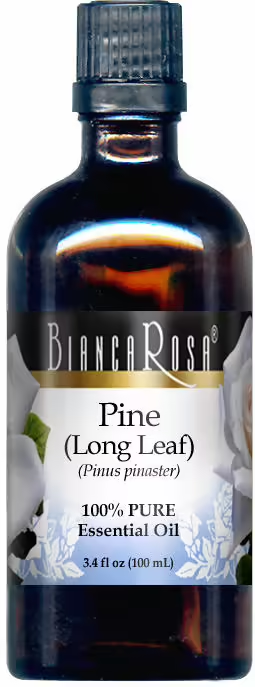
General Information Note: Bianca Rosa® Long Leaf Pine Needle Pure Essential Oil is not intended for internal use.
Scots Pine Pinus sylvestris L.
Family: Pinaceae.
Other Names: Pin sauvage (French); Waldkiefer (German); pino silvestre (Italian); pine silvestre (Spanish).
Description: A large tree (up to 30 m) with characteristic reddish brown bark, needle-shaped leaves and small, almost spherical cones. Several species are used to produce turpentine (oleoresin) and essential oil (by steam distillation), including pumilio pine (Pinus mugo subsp. pumilio), maritime pine (P. pinaster), pitch pine (P. palustris), common spruce (Picea abies), common fir (Abies alba) and common larch (Larix decidua). Cedrus deodora (Himalyan cedar or deodar) is popular in Ayurvedic medicine.
Origin: Europe, western and northern Asia. Pines, spruces and firs occur almost exclusively in the northern hemisphere.
Parts Used: Fresh/dried young branches (pine sprouts - Pini turiones), essential oil from the leaves and young branches (pine needle oil - Pini aetheroleum) or essential oil from turpentine (purified turpentine oil - Terebinthinae aetheroleum rectificatum). Also used are fresh fir sprouts (Piceae turiones recentes) and fir needle oil (Piceae aetheroleum). In the case of larch, a balsam is tapped from the trunks (larch turpentine - Terebinthina laricina).
Uses and Properties: Needle oils and turpentine oils are traditional expectorants used to treat catarrh of the upper and lower respiratory tract. Turpentine oil is specifically used against chronic bronchial disease with heavy secretion. The oil or formulated products (tintures, ointments, gels, emulsions) are rubbed into the skin as a counter-irritant to treat mild muscular pain, neuralgia and rheumatism. Larix balsam is used as inhalant but also for rheumatic and neuralgic conditions.
Preparation and Dosage: The products are included in cough medicines or are used as inhalants. The sprouts may be taken as teas, tinctures or syrups.
Active Ingredients: Turpentine oil contains mainly alpha-pinene, beta-pinene, camphene, beta-phyllandrene, delta-3-carene and limonene. Pine needle oil has similar monoterpenoids, but the distinctive odour is due to esters, mainly (-)-bornyl acetate.
Pharmacological Effects: Turpentine oil and needle oils are antiseptic and secretolytic. Topical use of turpentine or pine needle oil stimulates peripheral circulation (hyperaemic properties).
Share your questions and information with the ZooScape community!
Be the first to post!
Directions
All pure essential oils should be used with care. Do not apply directly into skin. A 2% dilution of essential oils to a base of carrier oil or lotion is recommended for all skincare and massage preparations.
Cautions
Generally regarded as non-irritant, though there are many reports indicating that pine essence is a sensitising agent. Oils which are old and oxidised are much more likely to cause problems with irritation and sensitisation. The oil should be avoided by those with sensitive skin. Always use in low concentrations of around 1 per cent.
Label Information
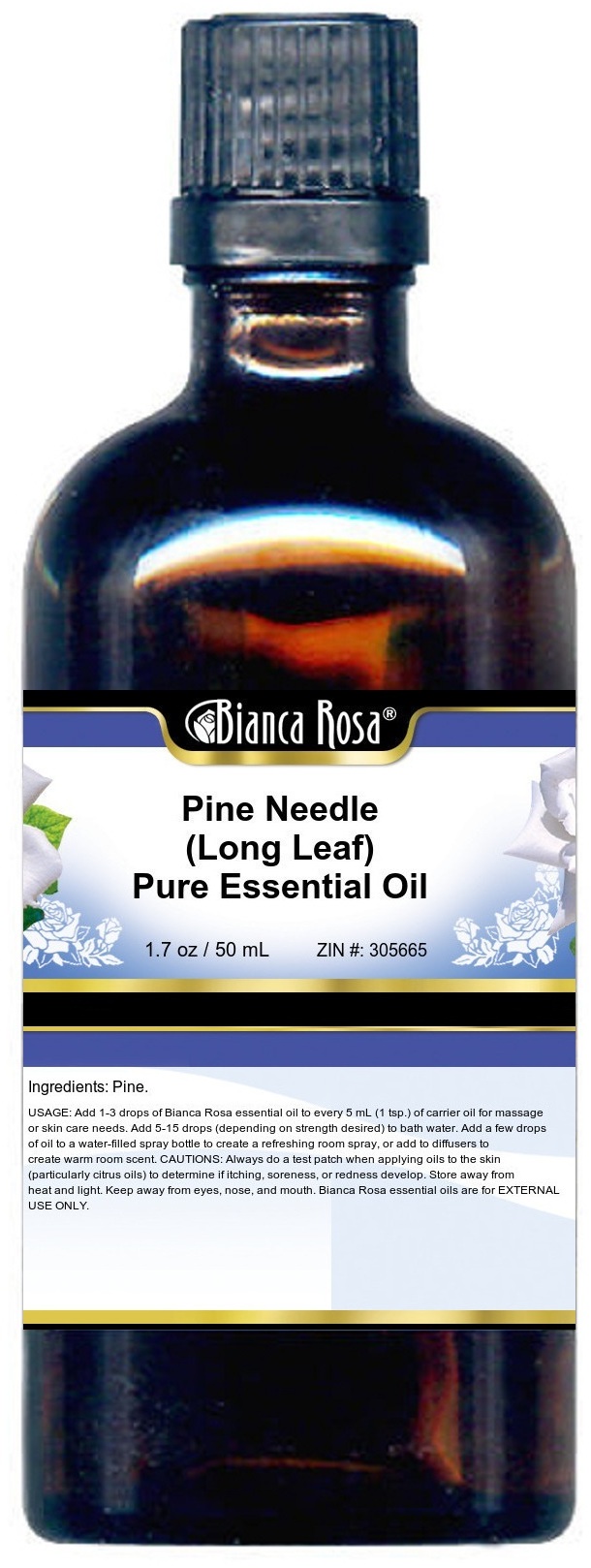
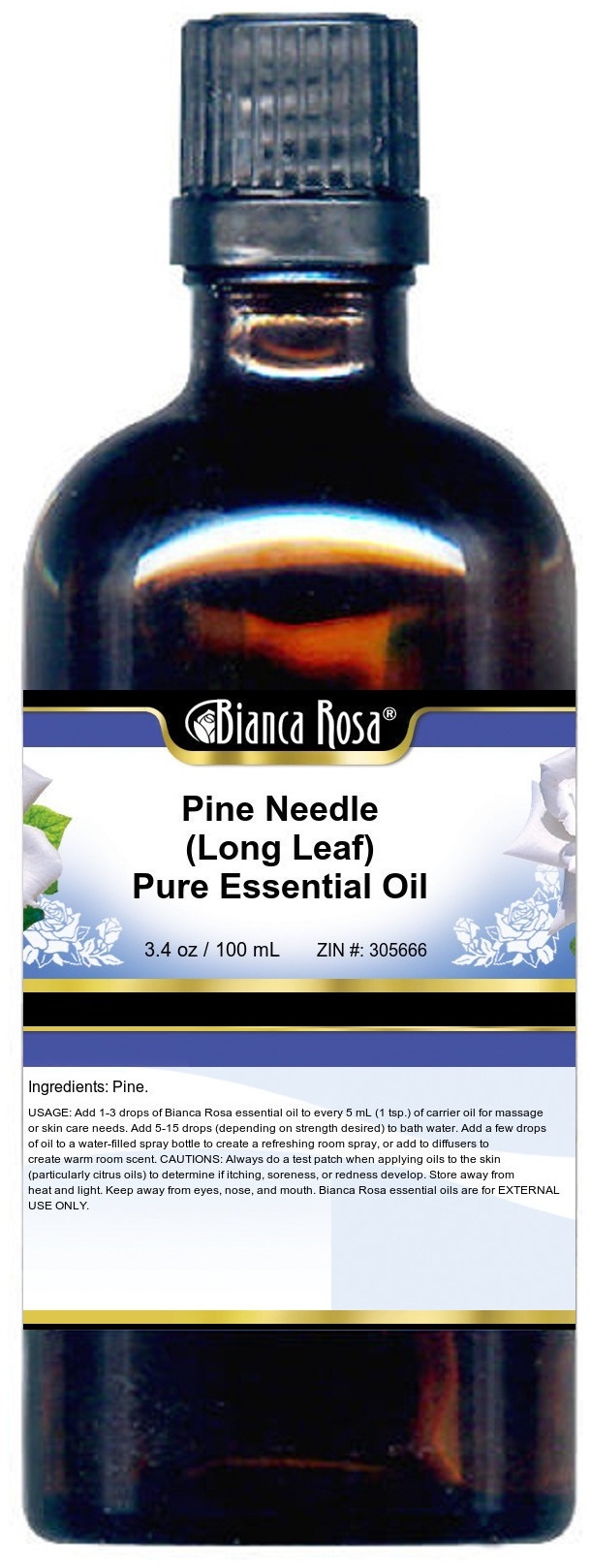
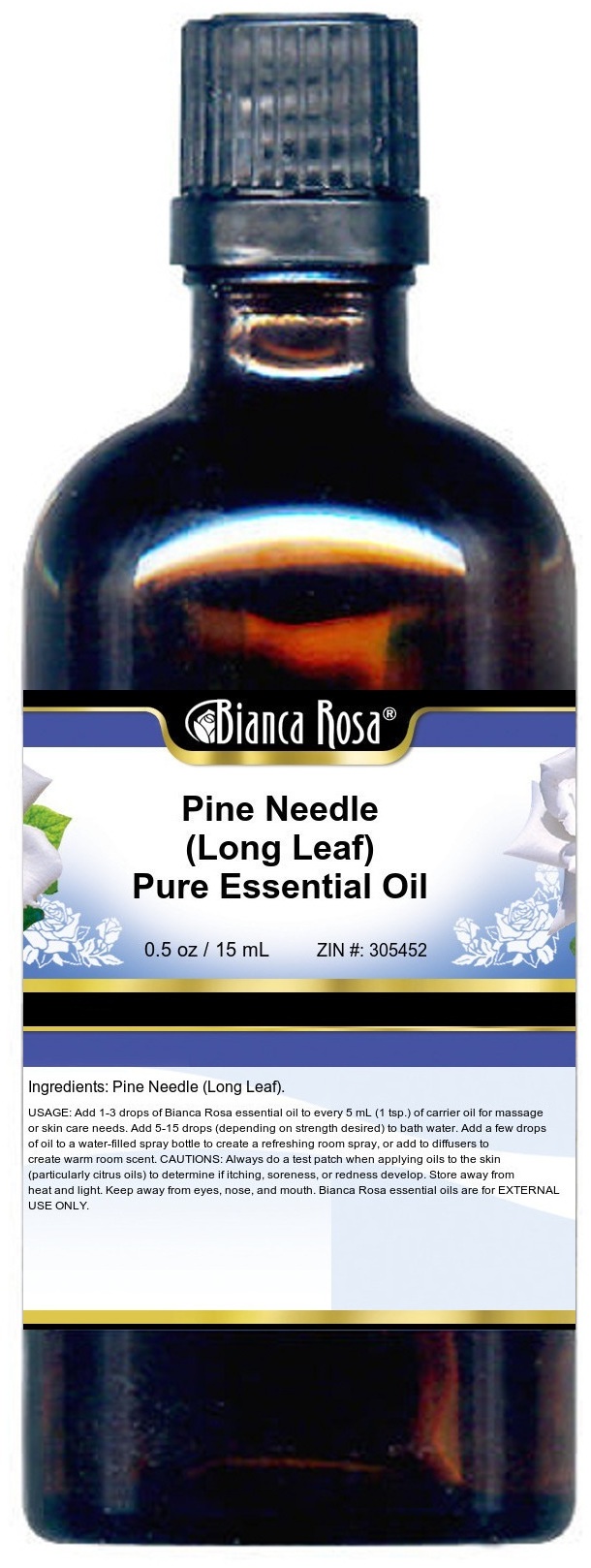
USAGE: Add 1-3 drops of Bianca Rosa® essential oil to every 5 mL (1 tsp.) of carrier oil for massage or skin care needs. Add 5-15 drops (depending on strength desired) to bath water. Add a few drops of oil to a water-filled spray bottle to create a refreshing room spray, or add to diffusers to create warm room scent. CAUTIONS: Always do a test patch when applying oils to the skin (particularly citrus oils) to determine if itching, soreness, or redness develop. Store away from heat and light. Keep away from eyes, nose, and mouth. Bianca Rosa® essential oils are for EXTERNAL USE ONLY.
Additional Information
Essential Oils by RedSafari.com are 100% Pure Natural Essences derived from the highest quality fruits, flowers, leaves, spices, herbs and roots. Our essential oil distillers and growers are located around the world, operating ethically, organically and chemical-free.
RedSafari.com Essential Oils Are Not Tested On Animals.
These statements have not been evaluated by the Food and Drug Administration (FDA). Products are intended to support general well being and are not intended to treat, diagnose, mitigate, prevent, or cure any condition or disease. If conditions persist, please seek advice from your medical doctor. The essence of the current American rule on Traditional Uses is, as stated by FTC, "Claims based on historical or traditional use should be substantiated by confirming scientific evidence, or should be presented in such a way that consumers understand that the sole basis for the claim is a history of use of the product for a particular purpose."