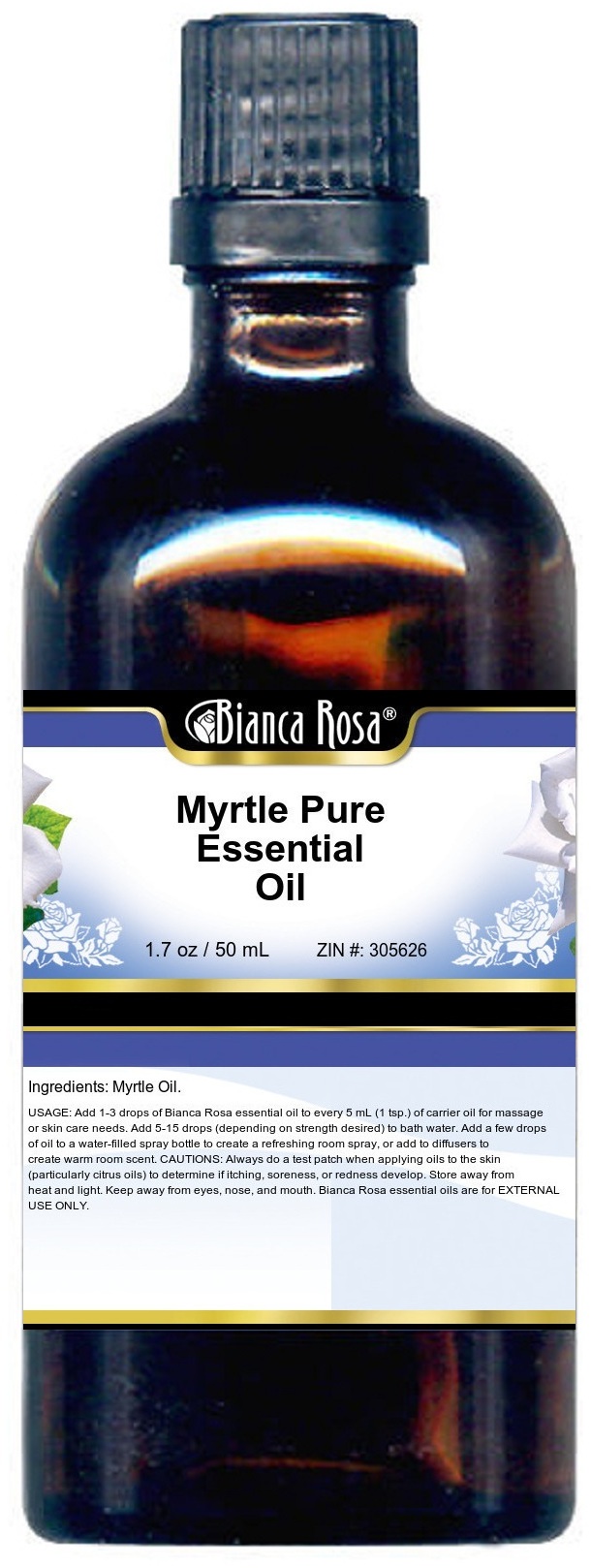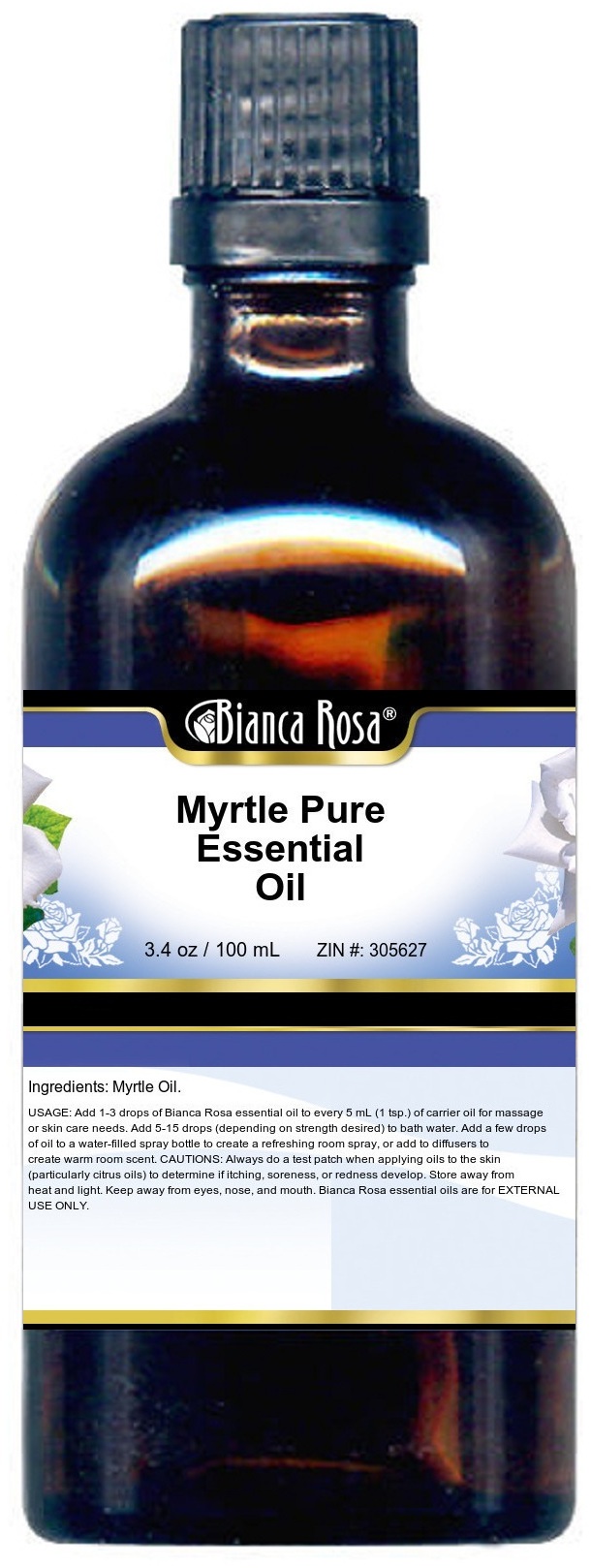
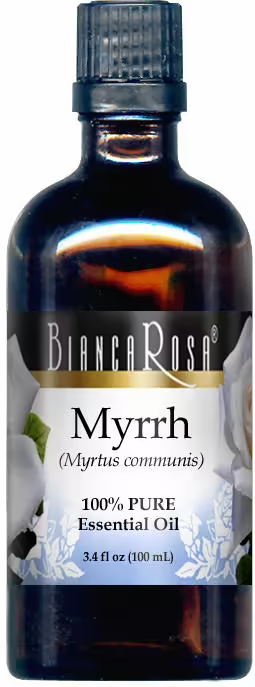

* Please Note: Traditional Use information is provided as a courtesy only. Although we have done our best to review the validity of these uses and we continue to revise this information as new data emerges, the traditional uses indicated on this page for this product may be wrong. This information is based on Traditional and Folklore Medicine which uses natural materials to support health. This information has not been evaluated or approved by the FDA and is not necessarily based on scientific evidence from any source. These statements have not been evaluated by the Food and Drug Administration (FDA). These products are intended to support general well being and are not intended to treat, diagnose, mitigate, prevent, or cure any condition or disease. If conditions persist, please seek advice from your medical doctor.
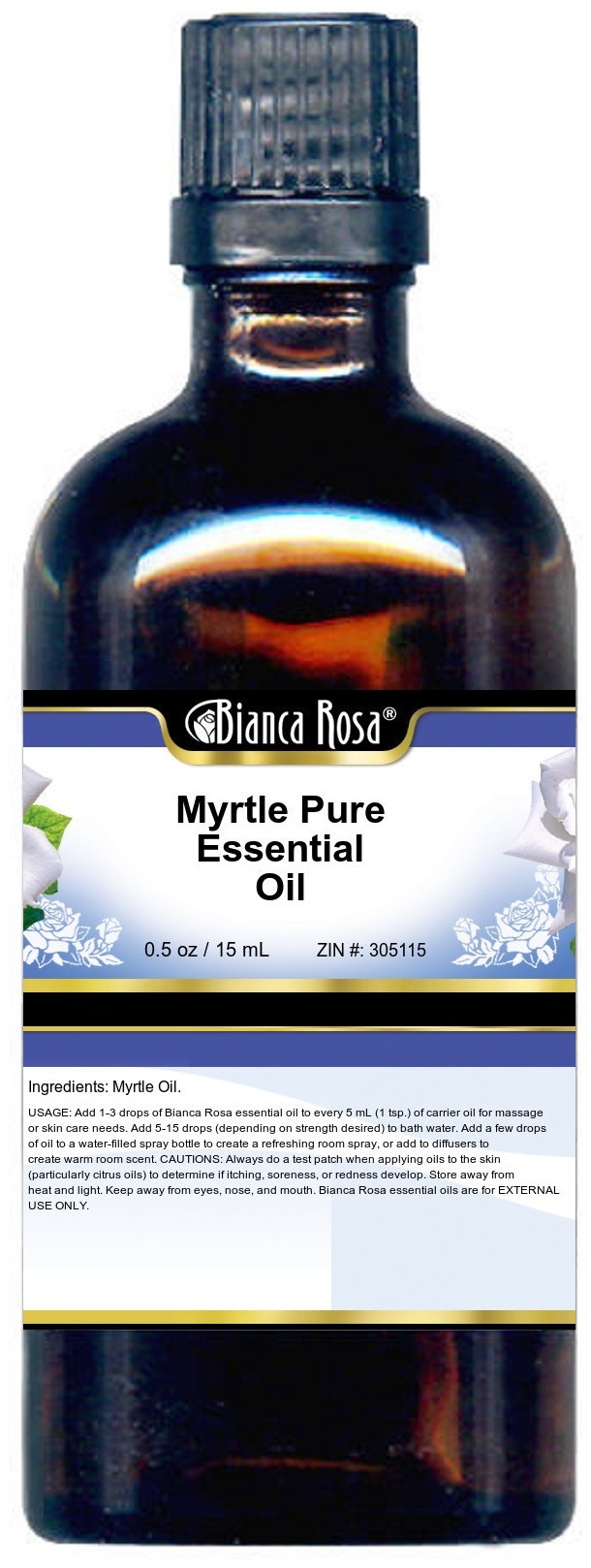
General Information *Note: Bianca Rosa® Myrtle Pure Essential Oil is for external use only.
Myrtle Myrtus communis L.
Family: Myrtaceae.
Other Names: Myrte (French); Echte Myrte (German); mirto (Italian).
Description: An evergreen shrub (up to 3 m, depending on cultivar) with small, dark green, glossy leaves, attractive white flower resembling those of Eucalyptus species and purple to black berries.
Origin: Unknown; The plant has been cultivated since ancient times and is now found from the Mediterranean to southern Asia. Myrtle is a symbol of purity and was commonly used in rituals in ancient Greece. Essential oil is produced mainly in Morocco, Tunisia, Lebanon, the former Yugoslavia and Corsica.
Parts Used: Leaves (Myrti folium), the essential oil (Myrti aetheroleum) or the ripe fruits.
Uses and Properties: Myrtle leaf or myrtle oil are relatively uncommon in modern phytotherapy but have been used since ancient times as an ingredient of cough syrups to treat chest infections, congestion, sinusitis and disorders of the urinary tract (considered to be a urinary tract disinfectant). The oil and leaves are applied externally to treat wounds, acne, piles and gum diseases. It has become popular in aromatherapy. A fraction of the oil, known as myrtol, is widely used as expectorant. A cough remedy based purely on myrt one of the top-selling phytomedicines in Germany.
Preparation and Dosage: Oil: 0.2 g; leaves: tea with 15 - 30 g per litre.
Active Ingredients: Essential oil (0.3 - 0.5%) with 1,8-cineole (12-45%), alpha-pinene (15-38%), myrtenol, myrtenyl acetate (4-20%), camphene, nerol, geraniol and dipentene. Leaves also contain a bitter substance and tannins. Myrtol is a fraction of the essential oil that contains mainly 1,8-cineole, limonene and alpha-pinene. The best quality is said to come from Corsica. Leaves are rich in gallotannins (8%), condensed tannins (14%) and phloroglucins (myrtucommulone A, B).
Pharmacological Effects: The oil exhibits spasmolytic, antibacterial and antifungal properties and is active against ectoparasites (lice, fleas). Consider the biological properties of the monoterpenes present (membrane disturbance; modulation of membrane proteins) the medicinal uses appear plausible.
Notes: The oil is important in the perfume industry and is an ingredient of "eau d' Ange".
Status: Traditional medicine; Pharm.
User Group Forum
Share your questions and information with the ZooScape community!
Be the first to post!
Directions
All pure essential oils should be used with care. Do not apply directly into skin. A 2% dilution of essential oils to a base of carrier oil or lotion is recommended for all skincare and massage preparations.
Ingredients
100% Pure Myrtle Essential Oil
Cautions
Avoid contact with sensitive areas, such as eyes. Citrus oils are photosensitive and should not be applied prior to sun exposure. During pregnancy, use only with advise from a trained aromatherapist. For external use only. Keep all bottles out of reach of children.
Additional Information
Essential Oils by RedSafari.com are 100% Pure Natural Essences derived from the highest quality fruits, flowers, leaves, spices, herbs and roots. Our essential oil distillers and growers are located around the world, operating ethically, organically and chemical-free.
RedSafari.com Essential Oils Are Not Tested On Animals.
These statements have not been evaluated by the Food and Drug Administration (FDA). Products are intended to support general well being and are not intended to treat, diagnose, mitigate, prevent, or cure any condition or disease. If conditions persist, please seek advice from your medical doctor. The essence of the current American rule on Traditional Uses is, as stated by FTC, "Claims based on historical or traditional use should be substantiated by confirming scientific evidence, or should be presented in such a way that consumers understand that the sole basis for the claim is a history of use of the product for a particular purpose."