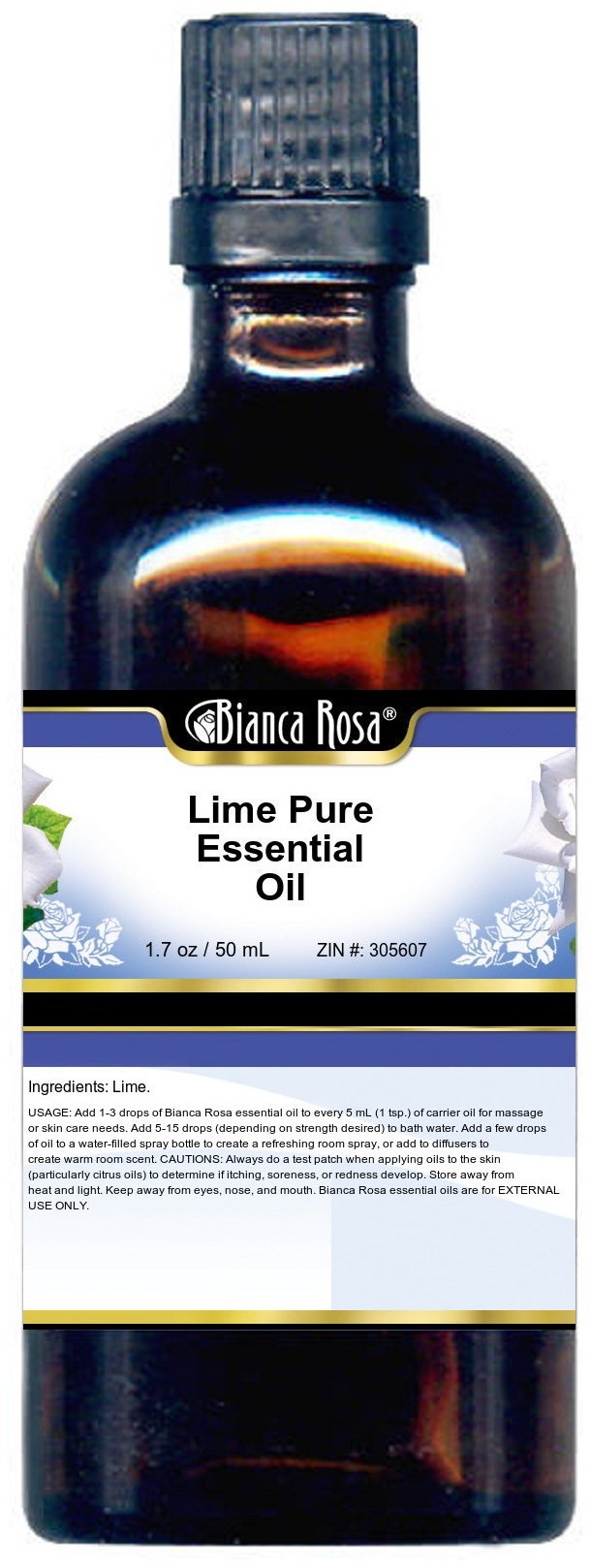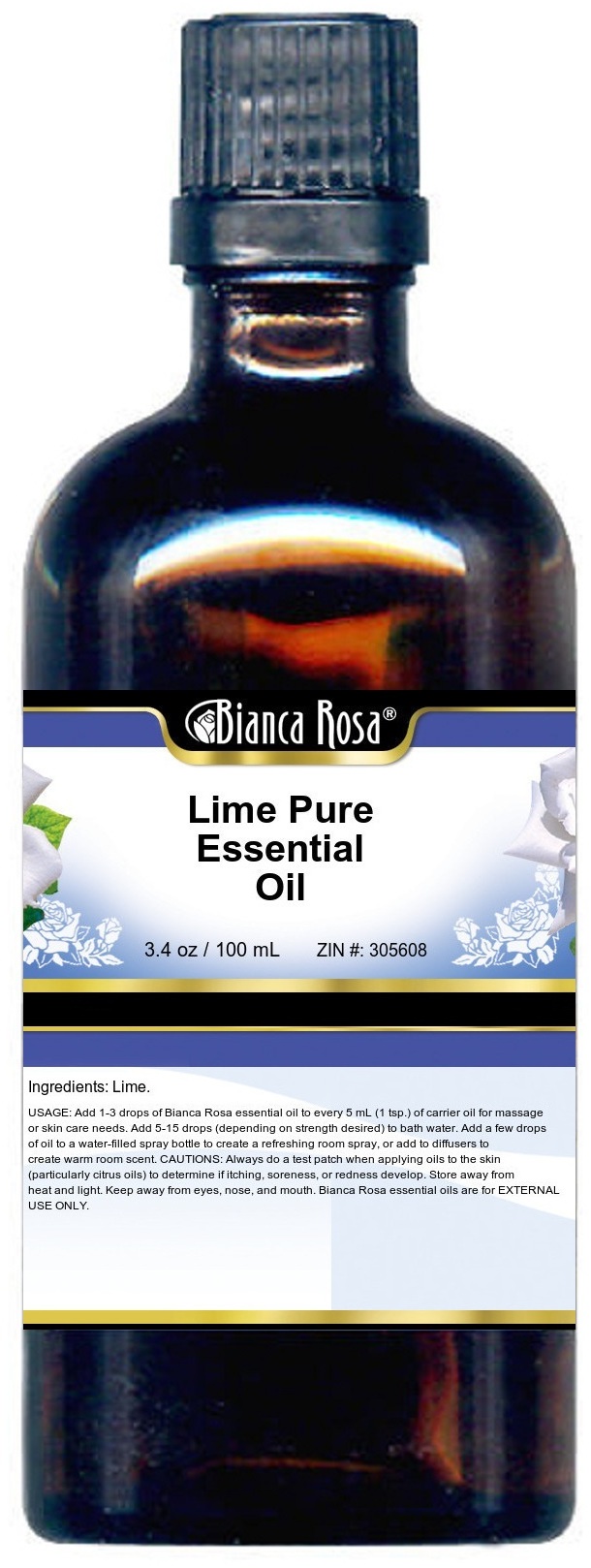
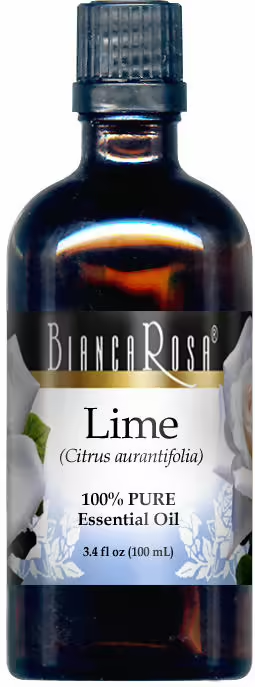

The scent of lime oil is sweet, tart, intense, and lively. It is considered a top-note fragrance with an odor intensity of about three out of five. Blending companions include florals, woods, and spices. With stimulating, cleansing, digestive, antivi...
* Please Note: Traditional Use information is provided as a courtesy only. Although we have done our best to review the validity of these uses and we continue to revise this information as new data emerges, the traditional uses indicated on this page for this product may be wrong. This information is based on Traditional and Folklore Medicine which uses natural materials to support health. This information has not been evaluated or approved by the FDA and is not necessarily based on scientific evidence from any source. These statements have not been evaluated by the Food and Drug Administration (FDA). These products are intended to support general well being and are not intended to treat, diagnose, mitigate, prevent, or cure any condition or disease. If conditions persist, please seek advice from your medical doctor.
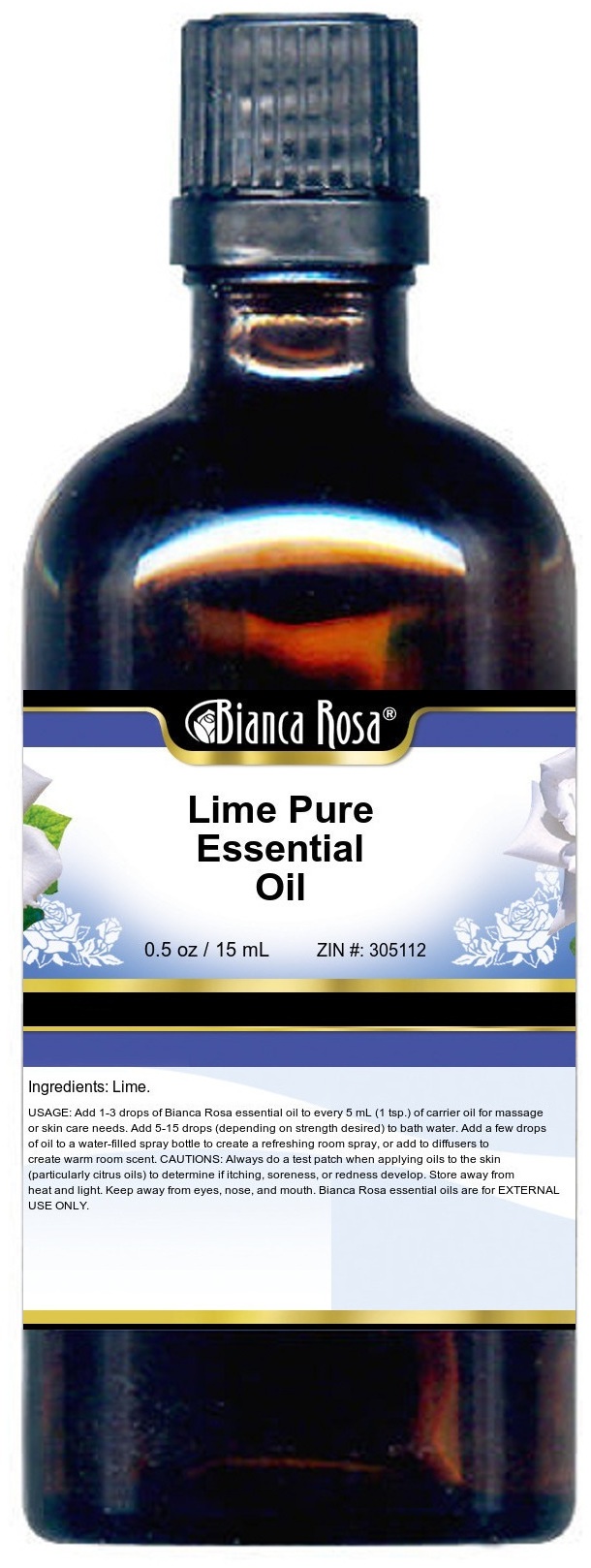
The scent of lime oil is sweet, tart, intense, and lively. It is considered a top-note fragrance with an odor intensity of about three out of five. Blending companions include florals, woods, and spices. With stimulating, cleansing, digestive, antiviral, and general tonic properties, lime oil is used for a variety of physical conditions. It is also reputed to be good for oily skin. For emotional benefits, this oil is used for mental and emotional clearing; it can help in creating emotional space and independence, and move one to action. Lime essential oil may be expressed or distilled; the expression process yields a fresh fragrance while distillation yields one that is candy-like. Don't confuse lime oil with that of lime blossom, Tillia europaea, more frequently called "linden".
Lime (Citrus aurantifolia)
Plant Family
Rutaceae.
Synonyms
C. medica var acida, C. latifolia.
Description and Distribution
A small evergreen tree growing to 8 feet (2 m), crooked and prickly with small white flowers followed by yellowish-green fruit about half the size of a lemon. The tree is native to Asia, but is extensively cultivated in other parts of the world. Most of the oil is produced in the USA and Italy.
Extraction Method
Cold expression of the peel of the unripe fruit. There is also a distilled oil with an inferior aroma captured from the crushed whole fruit, a by-product of the fruit juice industry. Most aromatherapists favour the expressed oil.
Nature of the Oil
A pale yellow or green liquid. The strong aroma is sharp and refreshing, just like the fruit. The odour effect is uplifting and cooling.
Main Constituents
Limonene, pinene, camphene, citral, cymene, cineol, linalol. The expressed oil also contains coumarins.
Colds and flu, depression, nervous exhaustion and other stress-related disorders.
Blends Well With
Other citrus essences, neroli, petitgrain, lavender, rosemary, clary sage, ylang ylang. The oil is highly odoriferous, so use sparingly.
User Group Forum
Share your questions and information with the ZooScape community!
Be the first to post!
Directions
All pure essential oils should be used with care. Do not apply directly into skin. A 2% dilution of essential oils to a base of carrier oil or lotion is recommended for all skincare and massage preparations.
Ingredients
100% Pure Lime Essential Oil
Cautions
The expressed oil is highly phototoxic and must never be applied to the skin shortly before exposure to natural or simulated sunlight. However, the distilled oil is non-phototoxic because it is free from coumarins. Both types of oil are potentially irritant to skin, so use in low concentrations. The oil has a short shelf-life and is therefore best used within six months of purchase.
Expressed oil is photosensitizing; distilled is not.
Additional Information
Essential Oils by RedSafari.com are 100% Pure Natural Essences derived from the highest quality fruits, flowers, leaves, spices, herbs and roots. Our essential oil distillers and growers are located around the world, operating ethically, organically and chemical-free.
RedSafari.com Essential Oils Are Not Tested On Animals.
These statements have not been evaluated by the Food and Drug Administration (FDA). Products are intended to support general well being and are not intended to treat, diagnose, mitigate, prevent, or cure any condition or disease. If conditions persist, please seek advice from your medical doctor. The essence of the current American rule on Traditional Uses is, as stated by FTC, "Claims based on historical or traditional use should be substantiated by confirming scientific evidence, or should be presented in such a way that consumers understand that the sole basis for the claim is a history of use of the product for a particular purpose."