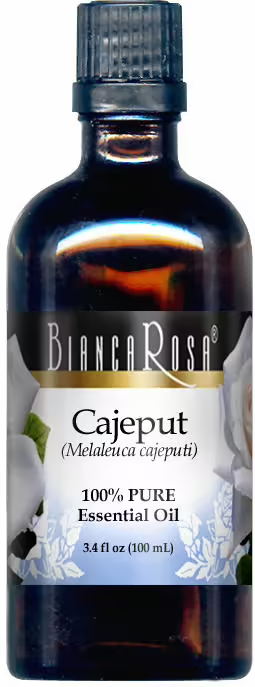

* Please Note: Traditional Use information is provided as a courtesy only. Although we have done our best to review the validity of these uses and we continue to revise this information as new data emerges, the traditional uses indicated on this page for this product may be wrong. This information is based on Traditional and Folklore Medicine which uses natural materials to support health. This information has not been evaluated or approved by the FDA and is not necessarily based on scientific evidence from any source. These statements have not been evaluated by the Food and Drug Administration (FDA). These products are intended to support general well being and are not intended to treat, diagnose, mitigate, prevent, or cure any condition or disease. If conditions persist, please seek advice from your medical doctor.
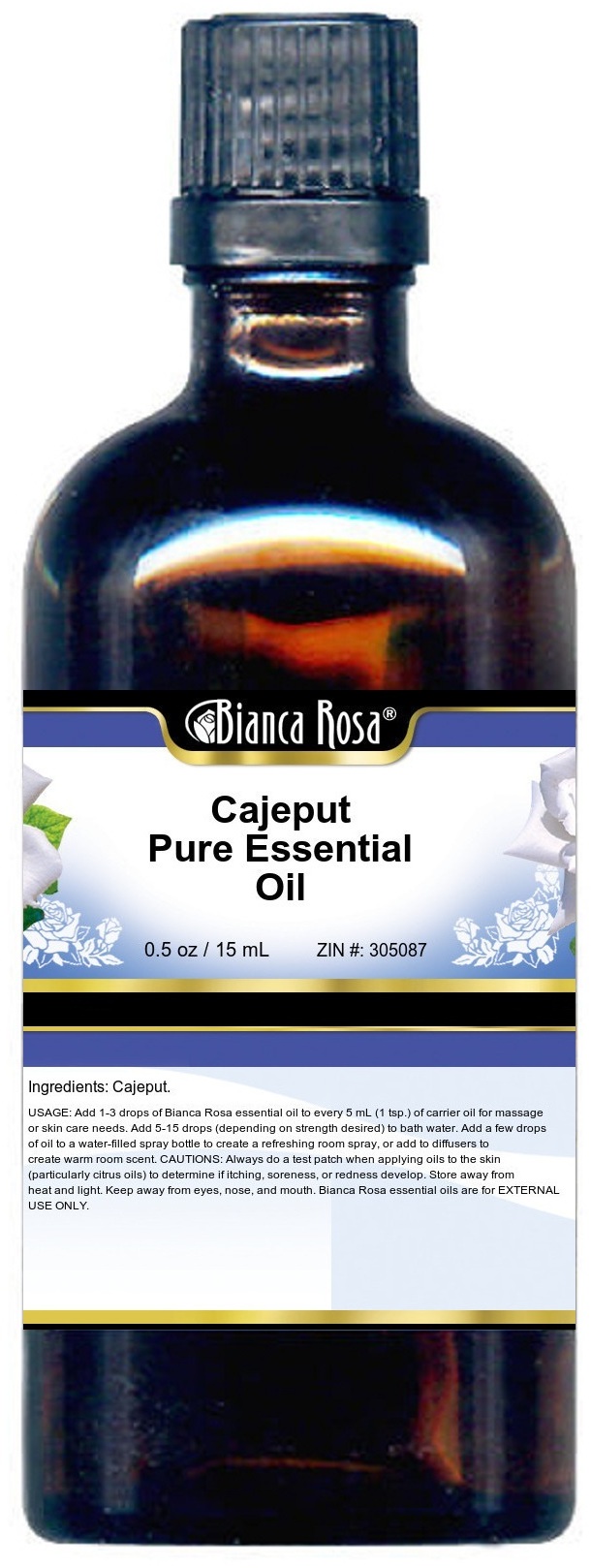
A tall evergreen tree native to Malaysia, the Philippines, Australia and south-eastern Asia. In the Philippines 'kajuputi' means 'white wood' which is indeed the colour of the timber. Cajeput is closely related to many other trees of the Melaleuca genus, notably eucalyptus and tea tree.
Extraction Method
Steam distillation of the leaves, buds and twigs.
Nature of the Oil
A pale yellow liquid. The aroma is camphoraceous with a peppery nuance. The odour effect is head-clearing and stimulating, followed by a sensation of cold.
Acne, arthritis, muscular aches and pains, rheumatism, stiff joints, respiratory ailments, cystitis, colds and flu.
Blends Well With
Bergamot, cypress, juniper berry, lemon, pine, rosemary. The oil is highly odoriferous, so use sparingly. Cajeput is also known as white tea tree or tea tree. The distilled oil is used externally for fungus infections, bruises and injuries, arthritic aches and pains, itches and bites on the scalp for dandruff. The terpenoids, cineole (from 50-65%), nerolidol, limonene, berixaldehyde, valeraldehyde, dipentene and various sesquiterpenes exhibit pharmacological actions that are stimulant, antiseptic, antispasmodic, diaphoretic, expectorant, and analgesic.
Cajuput is native to Australia and Southeast Asia and has become better known in the market as Tea-tree oil, of which there are actually many varieties. The oil can be used externally as an antifungus treatment for various types of itch, including athlete's foot, or as a liniment for a wide variety of problems. It has numerous applications: Mix ten drops with shampoo and leave on the head for ten minutes to get rid of head lice and nits, relieve an itchy scalp, or restore oily, dry hair.
It can be used as a substitute for eucalyptus oil in a steam bath or vaporizer to clear blocked sinuses; it is also applied directly for nasal and mouth sores; three drops mixed in water makes an effective mouthwash for dental plaque and bad breath; it can be rubbed on for muscle aches, boils, abrasions and bruises, dermatitis, pimples and acne, minor burns, sunburn, cradle cap, tropical ulcers, plantar warts, coral cuts, rashes, bites, fingernail infections, cuts and itches, congestion and coughs, arthritis.
Internally, one-quarter to one-half teaspoon of a food-grade oil (not Bianca Rosa) can be taken in warm water to promote perspiration for the early treatment of colds and flus; this is also an effective treatment for Candida albicans overgrowth. The same can be gargled as a treatment for sore throat. Thus this single oil can be carried as a virtual herbal first-aid treatment for most acute diseases.
User Group Forum
Share your questions and information with the ZooScape community!
Be the first to post!
Directions
All pure essential oils should be used with care. Do not apply directly into skin. A 2% dilution of essential oils to a base of carrier oil or lotion is recommended for all skincare and massage preparations.
Ingredients
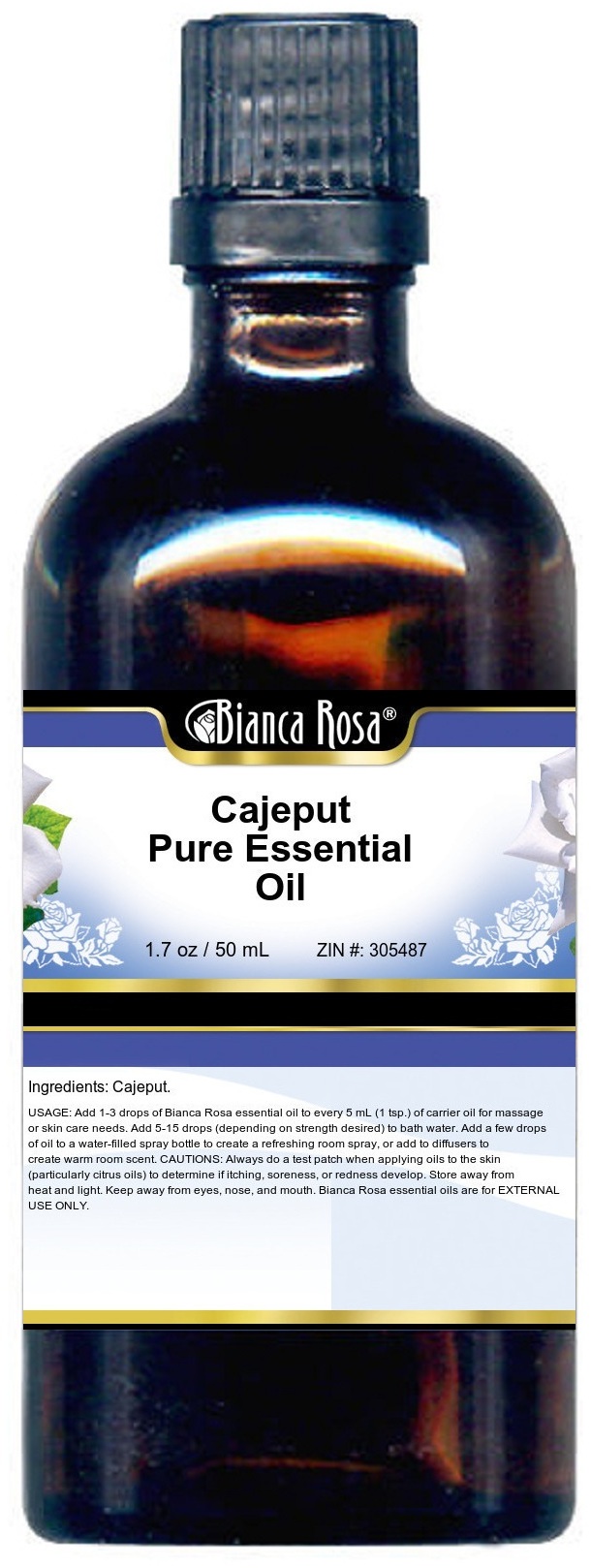
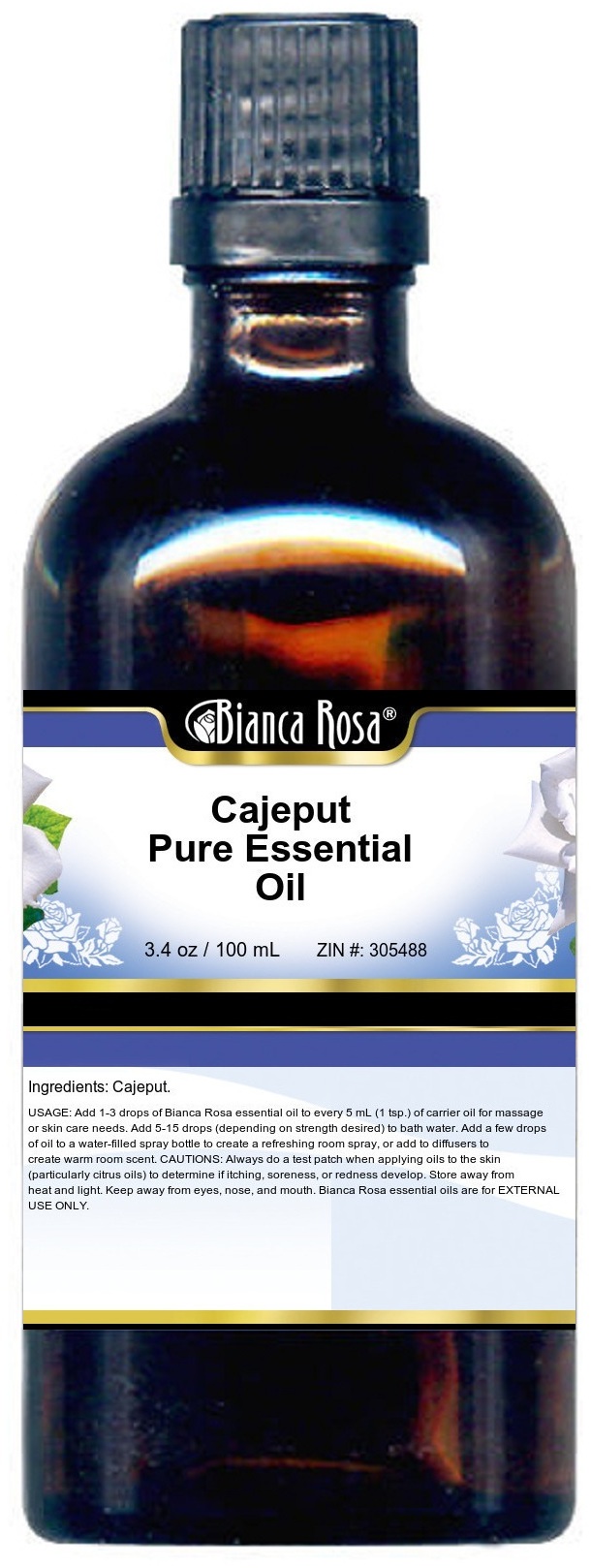
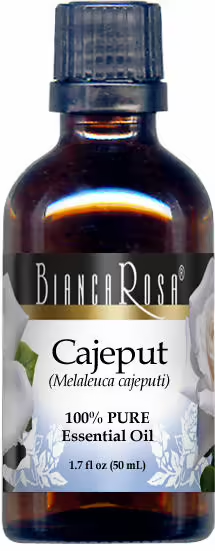
100% Pure Cajeput Essential Oil
Cautions
For those with sensitive skin, dilute pure oil with ten parts vegetable oil before applying.
Cajeput oil has been reported to cause skin irritation. However, the chance of this occurring is greatly reduced if the rectified oil is used. Many of the problems associated with cajeput may also be due to the fact that it is often adulterated with substances such as turpentine (highly irritant) and synthetic colourant. It is essential to obtain the oil from a reputable supplier who can vouch for its purity.
Additional Information
Essential Oils by RedSafari.com are 100% Pure Natural Essences derived from the highest quality fruits, flowers, leaves, spices, herbs and roots. Our essential oil distillers and growers are located around the world, operating ethically, organically and chemical-free.
RedSafari.com Essential Oils Are Not Tested On Animals.
These statements have not been evaluated by the Food and Drug Administration (FDA). Products are intended to support general well being and are not intended to treat, diagnose, mitigate, prevent, or cure any condition or disease. If conditions persist, please seek advice from your medical doctor. The essence of the current American rule on Traditional Uses is, as stated by FTC, "Claims based on historical or traditional use should be substantiated by confirming scientific evidence, or should be presented in such a way that consumers understand that the sole basis for the claim is a history of use of the product for a particular purpose."