
* Please Note: Traditional Use information is provided as a courtesy only. Although we have done our best to review the validity of these uses and we continue to revise this information as new data emerges, the traditional uses indicated on this page for this product may be wrong. This information is based on Traditional and Folklore Medicine which uses natural materials to support health. This information has not been evaluated or approved by the FDA and is not necessarily based on scientific evidence from any source. These statements have not been evaluated by the Food and Drug Administration (FDA). These products are intended to support general well being and are not intended to treat, diagnose, mitigate, prevent, or cure any condition or disease. If conditions persist, please seek advice from your medical doctor.
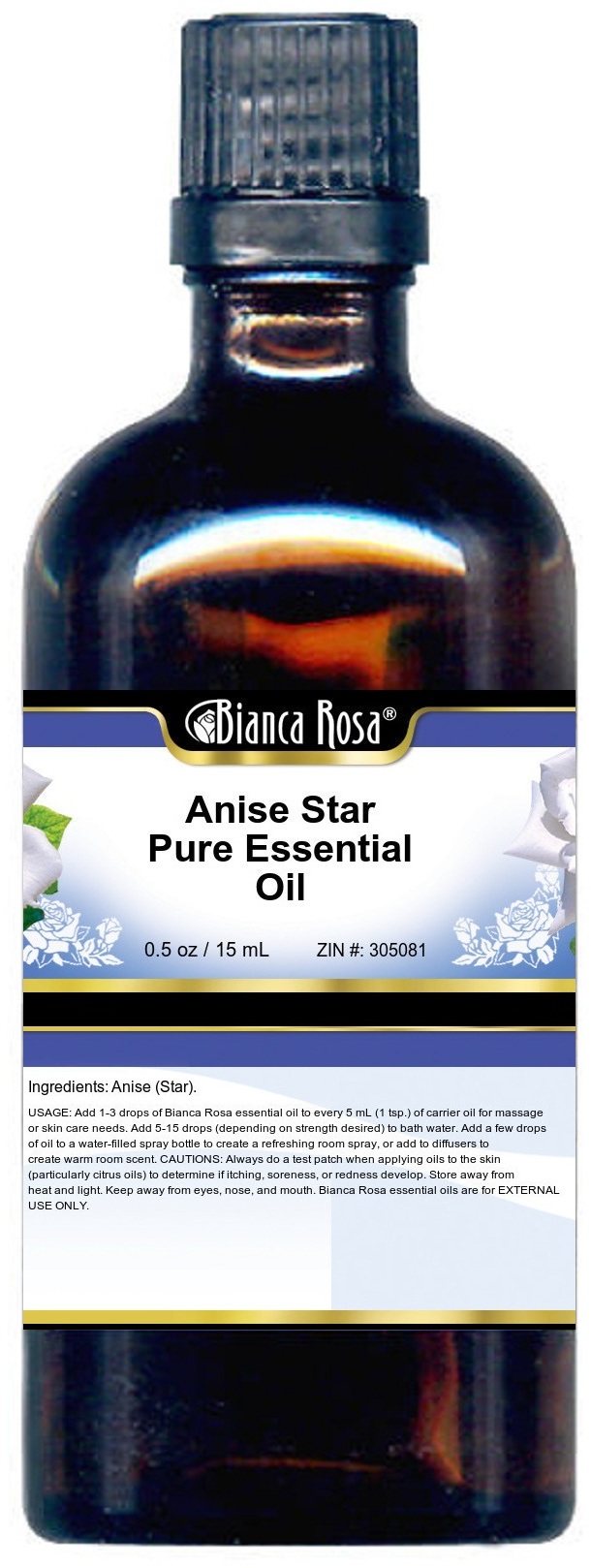
General Herb Information *Note: Bianca Rosa® Anise Star Pure Essential Oil is not to be taken internally.
Star Anise Illicium verum Hook. f.
Family: Illiciaceae.
Other Names: Chinese anise; ba jao hui xian (Chinese); badiane de Chine, aria étoilé (French); Echter Sternanis (German); anice stellato (Italian); anis estallado (Spanish).
Description: An evergreen small tree of up to 10 m in height, with dark green simple leaves and attractive yellowish green to reddish, solitary flowers. The distinctive star-shaped fruits are made up of eight separate carpels that each form a small capsule with a single, pale brown, shiny seed inside. Oil cells are in the pericarp. Star anise can be confused with Japanese anise, also known as bastard anise or shikimi (Illicium anisatum) - a toxic adulterant of star anise. It differs in the more irregular shape, smaller size, more yellowish colour and the broader follicles that have distinctly curved tips.
Origin: Northeastern Vietnam and southeastern China (I. verum) or Japan and Korea (I. anisatum) . The plant is no longer found in nature but it is widely cultivated in China, Japan and India to the Philippines.
Parts Used: Ripe fruit or syncarp (star anise fruit - Anisi stellati fructus).
Uses and Properties: Star anise is used to treat respiratory ailments (notably inflammation of the respiratory tract), and also dyspepsia (stomach discomfort, indigestion, bloating).
Active Ingredients: Star anise is rich in an essential oil that can be present in concentrations of up to 8% of dry weight. It is dominated by one main component, trans-anethole (80-90%), occurring with anisaldehyde, methyichavicol (= estragole) and some monoterpenoids (alpha-pinene, limonene and linalool). Real anise oil (Pimpinella anisum) does not have these monoterpenoids. Japanese anise has myristicin (absent in star anise) and sesquiterpene lactones such as anisatin, neoanisatin and pseudoanisatin, as well as shikimic acid (18%).
Pharmacological Effects: The fruits have proven antispasmodic and carminative properties. Anise-flavoured oils increase the tone and contraction of the smooth intestine muscles. Anisatin has convulsive properties and is responsible for toxic effects in I. anisatum.
Notes: Star anise is a spice and the oil is sometimes used in beverages and perfumes instead of the more expensive anise oil.
Status: Traditional medicine; Pharm.; Comm. E+.
User Group Forum
Share your questions and information with the ZooScape community!
Be the first to post!
Directions
All pure essential oils should be used with care. Do not apply directly into skin. A 2% dilution of essential oils to a base of carrier oil or lotion is recommended for all skincare and massage preparations.
Ingredients
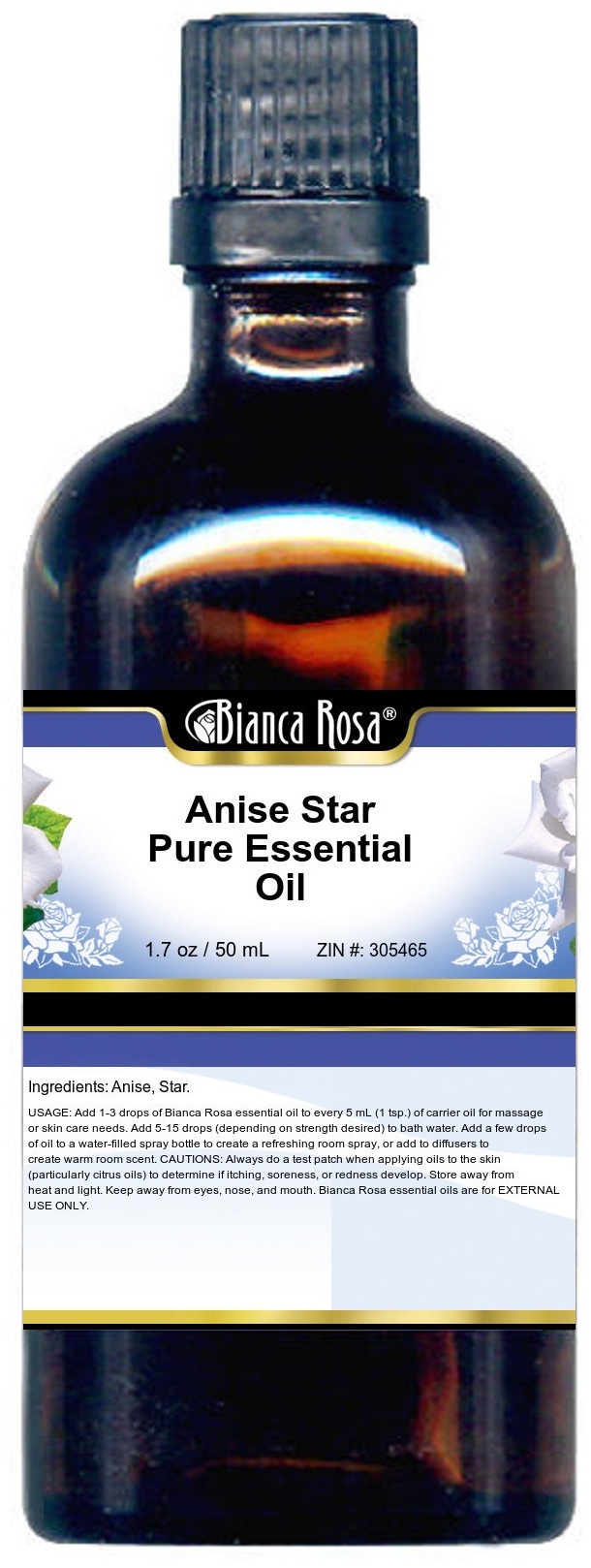
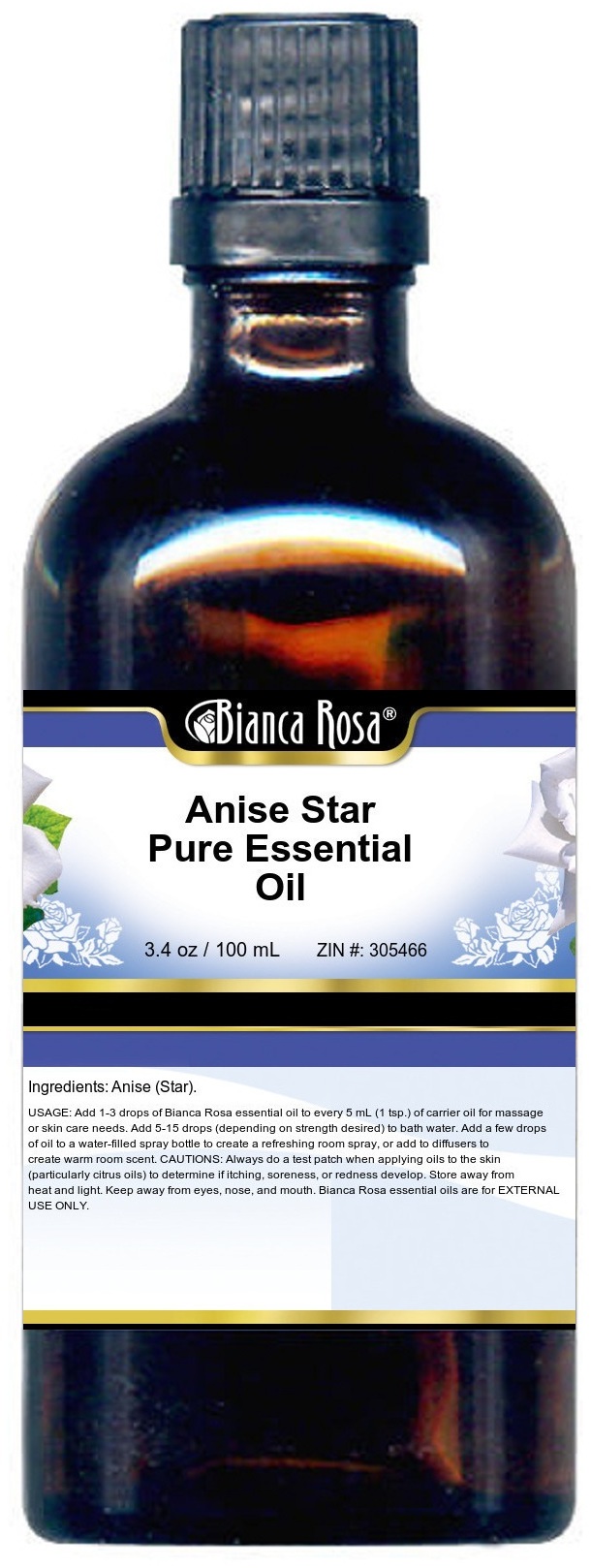
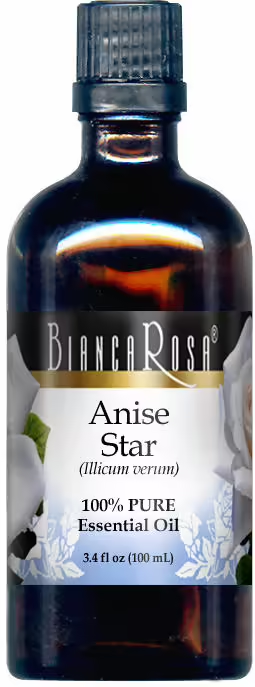
100% Pure Anise Star Essential Oil
Cautions
Avoid contact with sensitive areas, such as eyes. Citrus oils are photosensitive and should not be applied prior to sun exposure. During pregnancy, use only with advise from a trained aromatherapist. For external use only. Keep all bottles out of reach of children.
Additional Information
Essential Oils by RedSafari.com are 100% Pure Natural Essences derived from the highest quality fruits, flowers, leaves, spices, herbs and roots. Our essential oil distillers and growers are located around the world, operating ethically, organically and chemical-free.
RedSafari.com Essential Oils Are Not Tested On Animals.
These statements have not been evaluated by the Food and Drug Administration (FDA). Products are intended to support general well being and are not intended to treat, diagnose, mitigate, prevent, or cure any condition or disease. If conditions persist, please seek advice from your medical doctor. The essence of the current American rule on Traditional Uses is, as stated by FTC, "Claims based on historical or traditional use should be substantiated by confirming scientific evidence, or should be presented in such a way that consumers understand that the sole basis for the claim is a history of use of the product for a particular purpose."